


The Current Landscape
The survey, commissioned by the children’s commissioner for England, found that over 90% of schools have a policy restricting smartphone use. Interestingly, the type of ban varies significantly. While most primary schools require students to hand in their phones or prohibit them entirely, secondary schools often take a different approach. A large percentage allow students to keep their phones, but ban their use or display during school hours.
What the Data Shows
A national survey of over 15,000 schools found 99.8% of primary and 90% of secondary schools in England now enforce some kind of phone restriction during school hours. (1)
In many schools, strict bans or creative policies are having measurable effects: reductions in suspensions and detentions by 20-30%, sharp drops in online bullying or safeguarding incidents, and a calmer learning atmosphere. (2)
Research also shows that bans alone don’t solve everything. A study by the University of Birmingham published in The Lancet noted that while better phone policies correlate with certain benefits, bans in isolation don’t necessarily improve mental wellbeing, academic outcomes, or reduce overall screen time, unless backed by broader behavioural and cultural change. (3)
The Case for a Ban
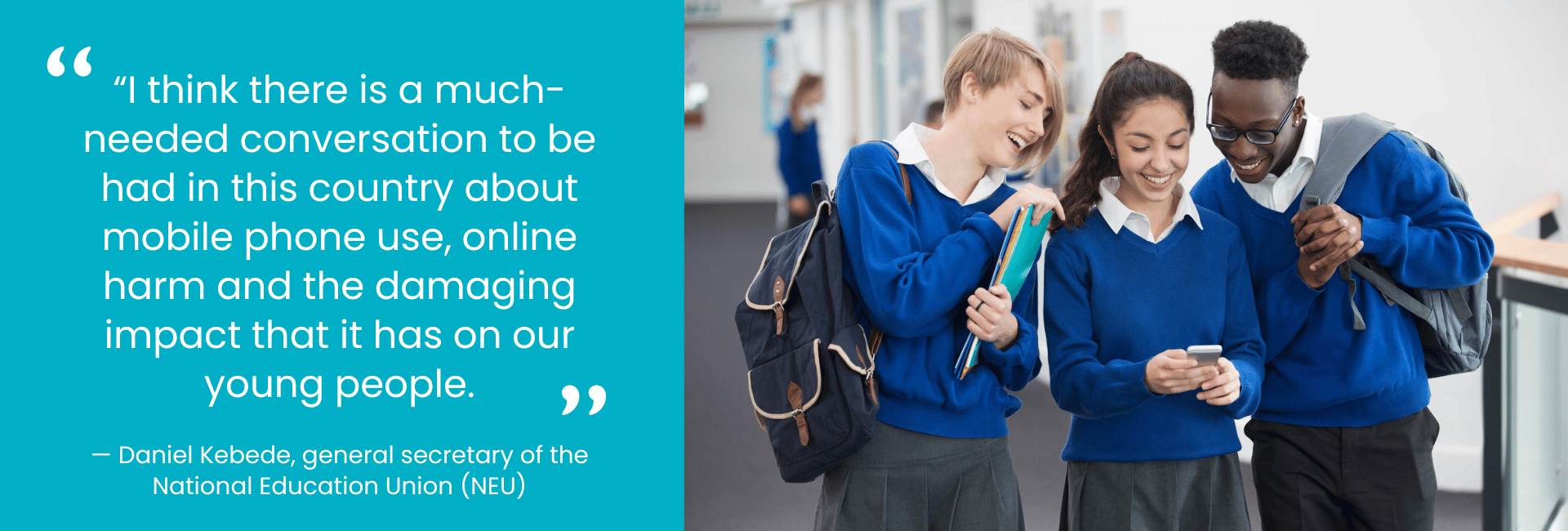
Proponents of a ban, including figures like Daniel Kebede of the National Education Union (NEU) and Education Secretary Bridget Phillipson, argue that smartphones have “absolutely no place in classrooms.” They believe a ban would reduce pressure on school staff and parents and create a better learning environment. Additionally, concerns about online harm and the negative impact of social media on young people’s mental health are major factors driving this movement.
The Other Side of the Coin
While the arguments for a ban are compelling, it’s also worth considering the potential benefits of integrating technology. When used constructively, smartphones can be powerful educational tools. They offer instant access to a wealth of information, a variety of learning apps, and new ways to collaborate on projects. Furthermore, a blanket ban may not fully address the underlying issues of social media use and online safety, which require a broader conversation involving students, parents, and educators.
A Path Forward
The data from the survey makes it clear that the trend is towards restricting smartphone use in schools. However, the varying approaches suggest that a one-size-fits-all solution may not be the most effective. Zioxi believes that the key lies in finding a balanced approach that supports effective learning while also addressing the challenges posed by mobile devices. This may include:
- Clear Policies: Implementing clear, well-communicated policies on device use.
- Education: Teaching students about responsible digital citizenship and the potential risks of online content.
- Finding the Right Solution: Schools are experimenting with implementation approaches: locked pouches, “brick phone” policies (i.e. phones that can’t access internet/apps), handing in phones at the start of the day or storing them in purpose built lockable cupboards.
- Infrastructure: Providing secure, in-class storage solutions, like Zioxi’s range of Smartphone Charging Lockers and Charging Cabinets, to manage devices during school hours without the need for a full ban.
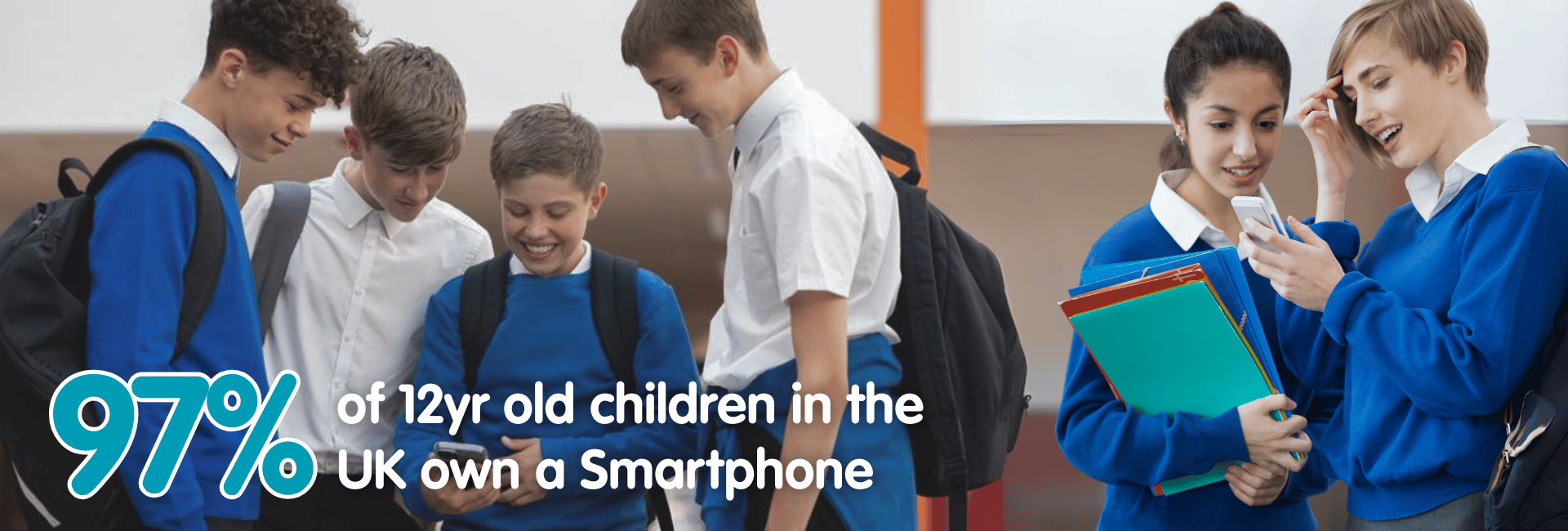
Ultimately, the debate over smartphones in schools is about more than just technology; it’s about fostering a healthy and productive learning environment. By understanding the arguments on both sides and implementing thoughtful, practical solutions, schools can navigate this challenge successfully.
While a complete ban might seem drastic, the evidence suggests that it can lead to a more productive and safer school environment. The challenge for many schools, however, is not just about the policy itself, but about the practical implementation.
Data Sources